
How to Practice Your Draw at Home
Aug 31st 2026
A Guide to Dry Fire Training
For anyone who carries a handgun or wants to improve their shooting skills, the draw is one of the most important skills to practice. Getting the firearm from its holster into a consistent shooting position requires coordination, repetition, and good technique.
The good news is that you don't need to visit the range every time you want to work on your draw. With a properly configured training setup, dry fire practice at home can help you develop a smoother, more consistent draw while saving ammunition and range time.
However, practicing the draw at home requires an emphasis on safety. When working with a firearm, always follow the manufacturer's safety instructions and ensure your training environment is appropriate for dry fire.
Our team at JV Training is going to break it down.
Why Practice Your Draw?
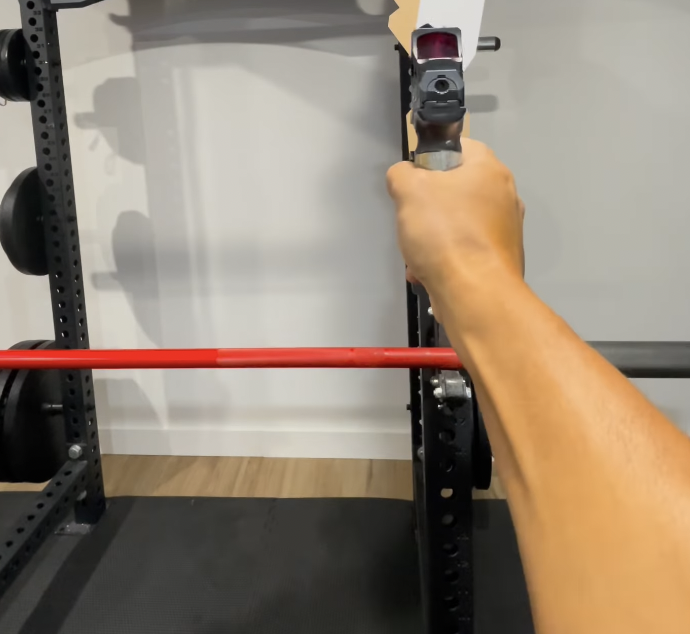
A good draw isn't simply about moving quickly. The goal is to develop a consistent, repeatable movement that you can perform efficiently.
Regular dry fire practice can help you work on:
- Establishing a consistent grip
- Clearing the garment
- Drawing smoothly from the holster
- Bringing the firearm toward the target
- Building a consistent presentation
- Building draw-to-shoot accuracy
- Developing proper trigger-finger discipline
- Improving overall movement efficiency
Speed can come later. Building the correct movement pattern should be the priority.
What You Need to Practice the Draw at Home
A basic dry fire setup doesn't need to be complicated.
Depending on your training goals, you may want:
- An appropriate training firearm or unloaded firearm
- A quality holster
- A safe training area
- A designated practice target
- A shot timer or training timer
- A training magazine
- A consistent starting position
Always confirm the firearm is unloaded before beginning dry fire practice. Remove all live ammunition from the training area, including ammunition stored in magazines or nearby containers.
If you're using a firearm for dry fire, follow the manufacturer's instructions regarding dry firing and use an appropriate training environment.
Create a Dedicated Dry Fire Area
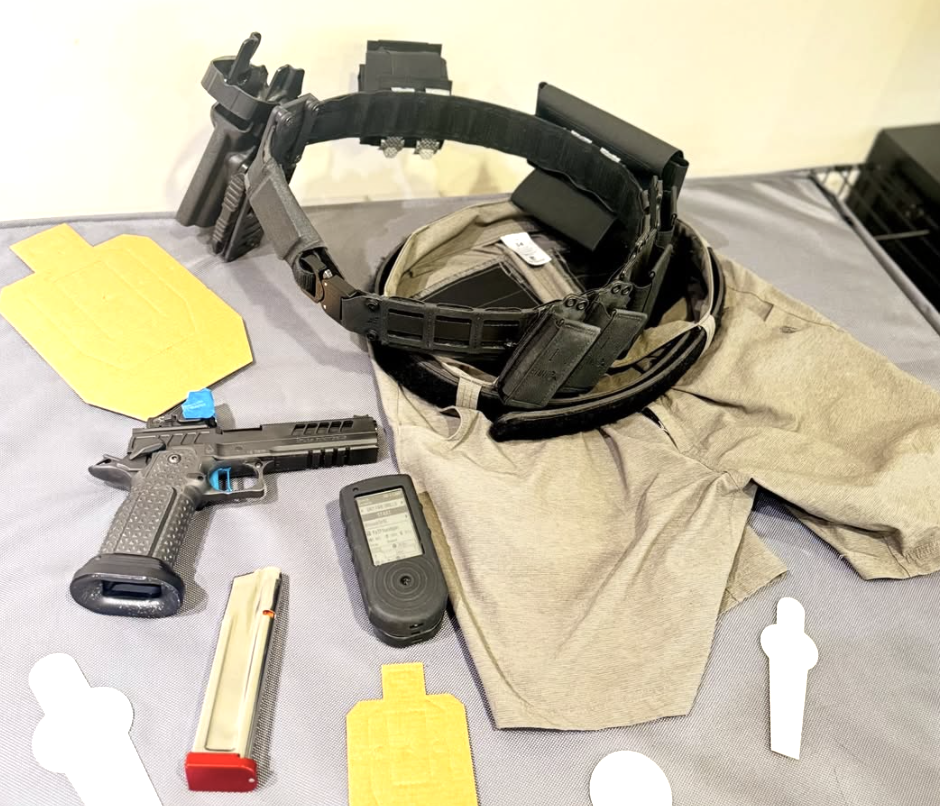
One of the best ways to improve your dry fire practice is to establish a dedicated training area.
Your practice area should be free of live ammunition and distractions. Choose a safe direction and use a clearly defined training target.
The goal is to create an environment where you can focus completely on your technique.
Before every session, establish a routine:
- Remove live ammunition from the area.
- Confirm the firearm is unloaded.
- Inspect the firearm and training equipment.
- Establish your safe training direction.
- Select your training target.
- Begin slowly.
Don't allow your dry fire routine to become so familiar that you stop consciously verifying your equipment and environment.
Start With the Grip
One of the most important parts of the draw happens before the firearm even leaves the holster.
Your goal is to establish a consistent grip every time.
Start by practicing the movement slowly.
Work on bringing your hands into the same position each repetition. Avoid immediately trying to set speed records. Instead, focus on making the movement smooth and repeatable.
Ask yourself:
- Am I establishing the same grip every time?
- Is my support hand meeting the firearm consistently?
- Am I keeping my trigger finger properly indexed?
- Am I introducing unnecessary movement?
Consistency is more valuable than speed when you're first learning or refining the movement.
Practice the Draw in Slow Motion
Slow practice is one of the most useful ways to identify problems with your technique.
Break the draw into individual components:
1. Establish Your Grip
Build the same grip you intend to use during shooting.
2. Clear the Holster
Practice removing the firearm from the holster in a controlled motion.
3. Bring the Firearm Up
Move the firearm toward your intended presentation position.
4. Join the Support Hand
Bring the support hand into position consistently.
5. Present
Complete the movement toward your intended target.
6. Confirm Your Trigger Finger Position
Maintain appropriate trigger-finger discipline throughout the movement.
Perform several repetitions at a deliberately slow pace. This allows you to identify unnecessary movement and inconsistent positions.
Don't Chase Speed Too Early
One of the biggest mistakes people make when practicing their draw is trying to go fast immediately.
Speed magnifies errors.
If your grip is inconsistent at a slow pace, increasing your speed won't solve the problem. It will usually make the inconsistency more pronounced.
Instead, develop a smooth movement first.
Once you can consistently perform the same sequence, gradually increase the pace while maintaining good technique.
Think:
Consistency → Efficiency → Speed
Not:
Speed → Chaos → Bad Habits
Use a Shot Timer for Objective Feedback
Once you've developed a consistent dry fire movement, a timer can provide useful feedback.
Instead of relying on how fast you feel you're moving, a timer gives you measurable results.
You can track:
- Draw time
- Consistency between repetitions
- Progress over multiple training sessions
- Performance under different starting conditions
However, don't let the timer become the only measure of success.
A faster repetition isn't necessarily a better repetition if it introduces poor mechanics.
Use the timer to measure progress while continuing to prioritize safe, consistent movement.
Practice From Different Starting Positions
Once your basic draw is consistent, you can introduce additional variables into your dry fire practice.
For example, you can practice starting with:
- Hands at your sides
- Hands in front of your body
- A neutral standing position
- Different clothing configurations appropriate to your training
The objective is to learn how your movement changes when your starting position changes.
Keep each drill simple enough that you can maintain control and focus on technique.
Practice Your Draw From Concealment
If you carry concealed, practicing from concealment can be an important part of your training.
Clothing can change the mechanics of your draw, which means practicing exclusively without a covering garment may not replicate your actual carry setup.
Use the same type of clothing you commonly wear and practice deliberately.
Focus on developing a consistent sequence rather than simply trying to move faster.
Never use live ammunition during dry fire practice.
Record Your Practice Sessions
Another useful training tool is recording your repetitions.
A phone camera can help you identify things you may not notice while performing the movement.
Look for:
- Unnecessary movement
- Inconsistent grip placement
- Excessive hand motion
- Problems with presentation
- Trigger-finger positioning
- Differences between repetitions
Recording a few repetitions every week can also help you visually track your progress.
Common Draw Practice Mistakes
Practicing Too Fast
Going fast before developing proper mechanics can reinforce inefficient movement.
Changing Your Technique Every Repetition
Your goal should be a consistent movement pattern. Constantly changing your technique makes it difficult to determine what actually works.
Ignoring the Support Hand
The support hand is an important part of establishing a consistent shooting grip.
Practicing Without a Plan
Random repetitions aren't always productive. Establish a specific goal for each training session.
Forgetting Safety Procedures
Dry fire should never become an excuse to become complacent about firearm safety.
Build a Simple At-Home Dry Fire Routine
You don't need to spend hours practicing.
A short, focused session can be productive.
For example:
Warm-Up
Perform several slow repetitions to establish your grip and movement pattern.
Technique Work
Practice the draw slowly while focusing on consistency.
Controlled Speed
Gradually increase your pace while maintaining your technique.
Timed Repetitions
Use a timer to measure your performance once your mechanics are consistent.
Review
Record a few repetitions or review your times and identify one area to improve during your next session.
The most important factor is consistency. Regular practice can be more beneficial than occasional marathon sessions.
Upgrade Your Dry Fire Training With JV Training Accessories
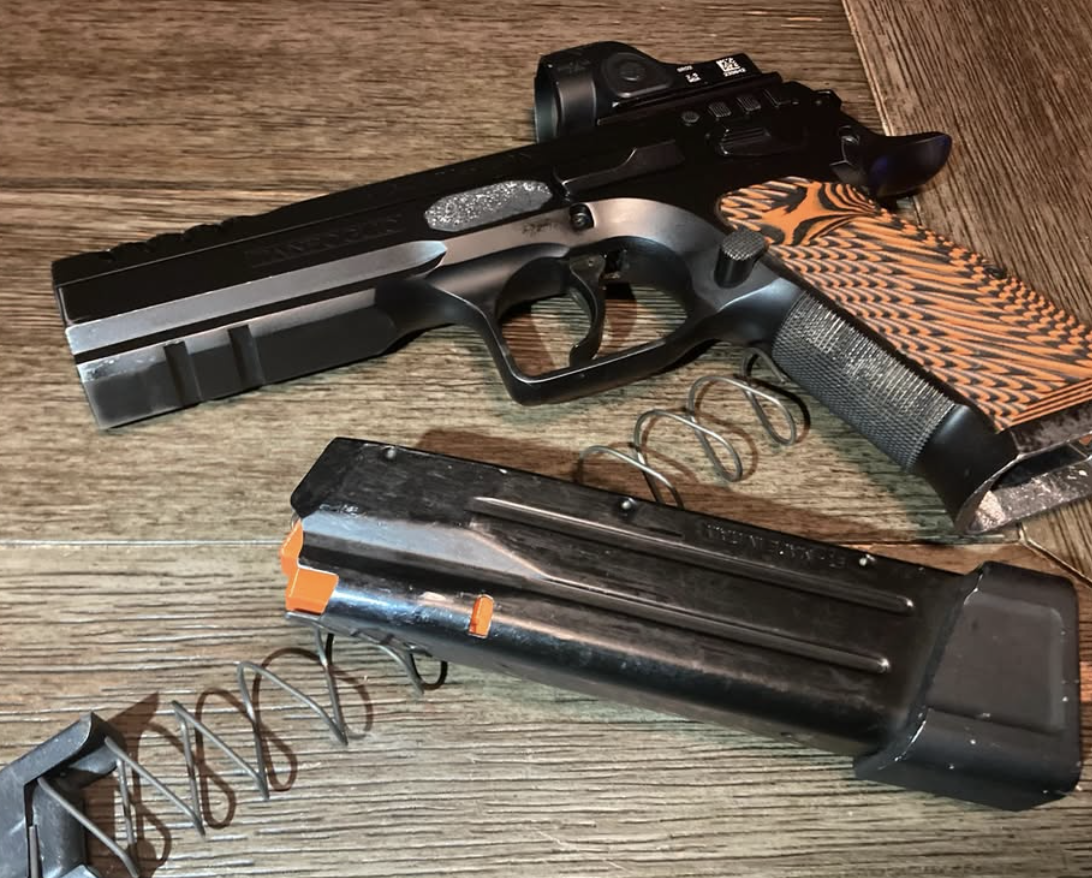
Having the right training equipment can make your dry fire sessions more structured and productive.
JV Training Accessories offers training products designed to help shooters practice, develop skills, and get more out of their training time.
Whether you're working on your draw, building consistency, or developing better training habits, having dedicated training accessories can help turn an empty room into a more purposeful practice environment.
Ready to improve your dry fire training? Check out the JV Training Accessories product lineup and find the training tools that fit your setup.
Final Thoughts
Learning how to practice your draw at home doesn't require expensive equipment or hours of training. It requires a safe environment, a consistent training process, and deliberate repetition.
Start slowly. Build a consistent grip. Practice the movement in stages. Once your technique is reliable, gradually introduce speed and objective measurements.
Most importantly, treat dry fire with the same respect you would any other firearms training activity. Confirm your firearm is unloaded, keep live ammunition away from the training area, and follow the manufacturer's instructions for dry fire.
With consistent practice and the right training equipment, your home can become a valuable supplement to your time at the range.
Train smarter. Train consistently. Train with JV Training Accessories.
Be sure to check out JV Training Accessories on Instagram!